For many students and recent graduates entering the tech industry, technical skills often feel like the main priority. Learning programming languages, data analytics tools, cloud platforms, or business intelligence software can seem like the most crucial step toward building a successful career.
And while technical expertise absolutely matters, it is only part of the equation.
In today’s workplace, employers are not only looking for professionals who can complete technical tasks. They are looking for people who can communicate clearly, collaborate effectively, adapt to change, and solve problems under pressure.
These are soft skills and they play a much bigger role in career growth than many people realize.
The strongest professionals are usually the ones who combine technical knowledge with strong interpersonal and professional abilities. Because no matter how advanced technology becomes, successful projects still depend on people working together to solve genuine business challenges.
Why Soft Skills Matter in Tech
There is a common misconception that tech careers are mostly independent and technical. Many people imagine developers, analysts, or engineers working alone behind screens with little interaction.
In reality, modern technology environments are highly collaborative.
Teams constantly communicate with managers, clients, stakeholders, and coworkers. Projects evolve quickly; priorities shift, and unexpected challenges appear regularly. Technical knowledge helps you perform the work, but soft skills help you navigate the environment around that work.
This is why employers increasingly value candidates who can:
- Communicate ideas clearly.
- Work effectively in teams.
- Adapt to changing situations.
- Think critically when solving problems.
- Manage feedback professionally.
- Continue learning over time.
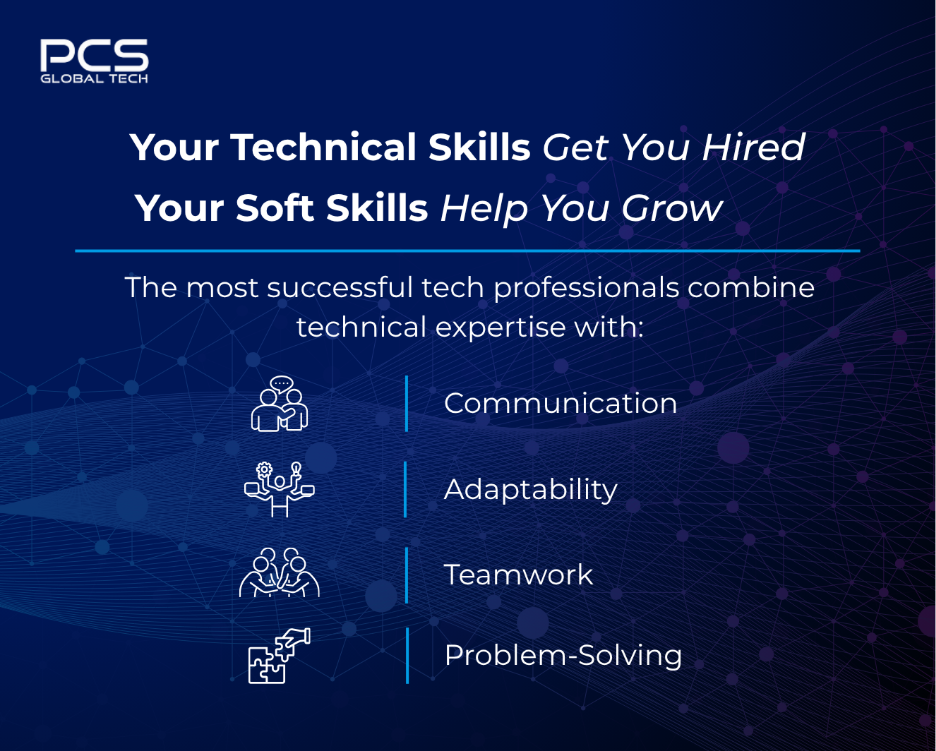
For students and early-career professionals, developing these abilities early can create a major advantage when entering the workforce.
Communication Builds Professional Confidence
One of the most important soft skills in any tech career is communication.
Even highly technical roles require professionals to explain ideas, ask questions, share updates, and collaborate with others.
Imagine building a dashboard, writing code, or analyzing data but struggling to explain your findings during a meeting. Even if the technical work is excellent, poor communication can make collaboration more difficult and reduce the impact of your contributions.
Effective communication skills help professionals:
- Explain technical concepts in simple terms.
- Present ideas clearly.
- Collaborate with teams more effectively.
- Reduce misunderstandings.
- Build stronger professional relationships.
- Perform better during interviews.
Communication is especially important for recent graduates entering the workforce for the first time. Academic environments often focus heavily on technical learning, but workplace success also depends on how effectively you interact with others.
This is one reason structured career programs are becoming increasingly valuable for young professionals.
The Talent Development Program (TDP) at PCS Global Tech focuses not only on technical training but also on professional development. Through mentorship, mock interviews, collaborative learning, and career preparation, participants gain experience improving both their technical confidence and communication abilities.
By helping trainees practice professional interaction in real-world scenarios, programs like TDP better prepare participants for workplace expectations.
Adaptability Helps You Grow Faster
The tech industry changes constantly.
New tools emerge, business needs to evolve, and companies continuously adopt modern technologies. Professionals who succeed long-term are usually the ones who can adapt and continue learning.
Adaptability is what allows someone to move forward instead of feeling overwhelmed by change.
For early-career professionals, adaptability can mean:
- Learning modern technologies quickly.
- Adjusting to different project requirements.
- Managing unfamiliar challenges.
- Accepting feedback constructively.
- Growing through new experiences.
The transition from education to employment often requires a major mindset shift. In school, assignments usually follow clear instructions and predictable timelines. In professional environments, projects are often more dynamic and collaborative.
That is why firsthand learning experiences matter so much.
PCS Global Tech’s TDP Program helps participants build adaptability by exposing them to practical exercises, real-world business scenarios, and collaborative project experiences. Instead of focusing only on theory, the program helps trainees develop the flexibility and confidence needed in modern work environments.
Learning how to adapt early in your career can significantly improve your ability to grow professionally over time.
Teamwork Is Essential for Real-World Projects
Technology projects are rarely individually made efforts.
Developers collaborate with analysts. Analysts collaborate with consultants. Consultants communicate with clients and stakeholders. Every successful project depends on teamwork.
Being technically skilled is important, but being able to work effectively with others is equally valuable.
Strong teamwork skills help professionals:
- Collaborate more efficiently.
- Share ideas openly.
- Solving problems faster.
- Support project goals.
- Build trust within teams.
- Improve workplace relationships.
Employers value professionals who contribute positively to team environments because collaboration directly impacts productivity and project success.
For students and graduates, teamwork experience can also help reduce the anxiety of entering professional environments for the first time.
Structured learning programs like TDP encourage collaborative experiences that simulate real workplace situations. Participants learn not only technical concepts but also how to communicate, collaborate, and support team objectives in practical settings.
These experiences can make the transition into professional work environments much smoother.
Problem-Solving Goes Beyond Technical Issues
Problem-solving is another soft skill that employers highly value.
Many people think problem-solving only refers to fixing technical errors or troubleshooting software. But in professional environments, problem-solving often involves much more than that.
Strong analytical people know how to:
- Analyze situations carefully.
- Think critically under pressure.
- Identify root causes.
- Evaluate viable solutions.
- Stay calm during challenges.
- Making informed decisions.
Sometimes the challenge is technical. Other times, it may involve communication gaps, shifting priorities, or business requirements that need clarification.
Professionals who approach problems with curiosity, flexibility, and collaboration are often the ones who grow fastest in their careers.
The TDP Program helps participants strengthen these abilities by combining technical learning with real-world exercises that encourage analytical thinking and collaboration. This helps trainees gain confidence not only in technical execution but also in navigating workplace challenges professionally.
Technical Skills Open Doors, Soft Skills Help You Grow
Technical expertise is essential for entering the tech industry. But soft skills are often what determine long-term success.
Professionals who communicate effectively, adapt quickly, collaborate well, and solve problems confidently are usually better prepared to grow within organizations and take on larger responsibilities over time.
For students, recent graduates, and early-career professionals, developing both technical and professional skills can create a stronger foundation for future success.
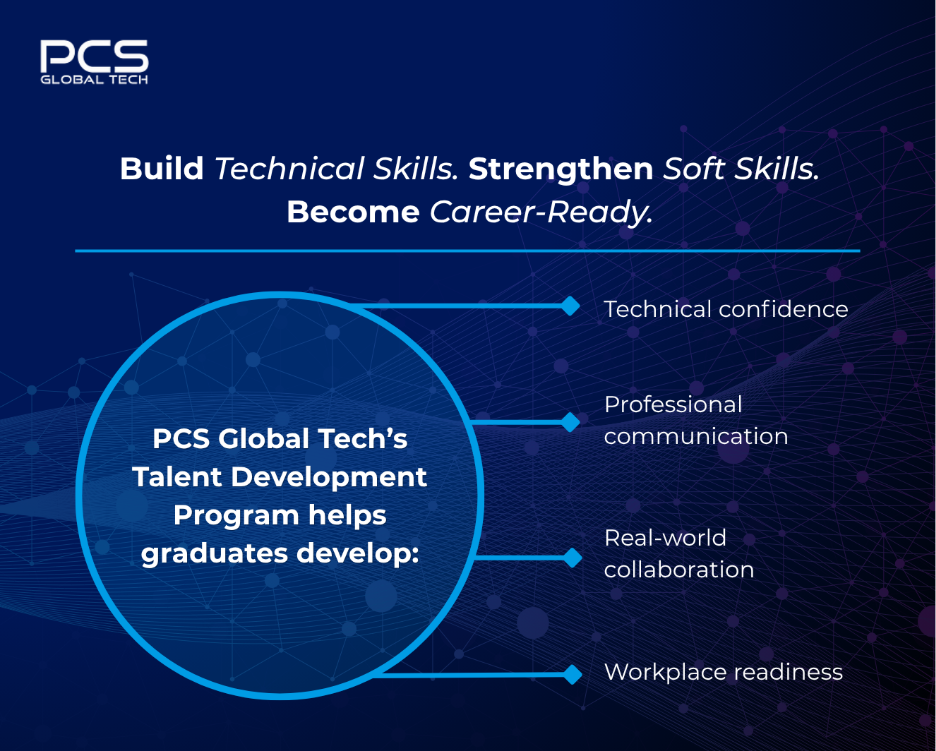
That is why programs like PCS Global Tech’s Talent Development Program are so valuable. By combining technical training with mentorship, firsthand learning, interview preparation, and professional development, TDP helps participants become more career-ready for today’s competitive tech industry.
Final Perspective
Technical skills may help you get noticed initially, but soft skills are what help you succeed long-term.
Communication, adaptability, teamwork, and problem-solving allow professionals to work effectively with others, navigate change, and continue growing throughout their careers.
The good news is that these skills can be developed through practice, mentorship, collaboration, and real-world experience.
For early-career professionals looking to strengthen both their technical abilities and workplace readiness, structured learning programs can make a major difference.
Looking to accelerate your tech career after graduation? Apply now to the TDP Program.
Learn more about the program through PCS Global Tech